

Anime in Football, Powered by Player Passion
How footballers turned anime from an off-pitch interest into a cultural and matchday signal.

Anime has found a home in football. What previously we would’ve been labelled as a ‘mad crossover’ now sits comfortably in today’s game.
Brought in through players’ personal interests, anime and manga show up on the pitch via celebrations,and off it through social media posts and brand collaborations. What started as individual expression has evolved into cultural integration.
Anime is a global force in its own right. It’s following stretches beyond core fans into fashion, music, art – and now, football.
Thanks to the players’ genuine love for colourful, action-packed storylines and graphic universes, the two worlds collide naturally. Not forced and not trend-chasing.
Japanese animation and the beautiful game might look worlds apart. In reality, they share more DNA than you’d think – discipline, transformation arcs, loyalty, resilience. The parallels write themselves.
Paired together, they create a powerful cultural dynamic. Broader reach, wider audience, stronger identity.
Players with Heart Eyes for Anime
What once felt niche is now mainstream, and footballers aren’t just keeping it behind closed doors – they’re bringing it onto the pitch. Turning goals celebrations into cultural signals.
At Liverpool alone, there’s a notable lean-in.
Ibrahima Konaté has performed the iconic “Shinzou wo Sasageyo” salute from Attack on Titan. Ryan Gravenberch has nodded to Jujutsu Kaisen. Jeremie Frimpong draws personal motivation from Naruto.
Across Europe, Antoine Griezmann channels Luffy’s “Gear 2” pose from One Piece in La Liga. Pierre-Emerick Aubameyang goes full Dragon Ball Z in Ligue 1 - “Instant Transmission” celebrations, custom trainers, even tattoos.
Then there’s Dominic Solanke.
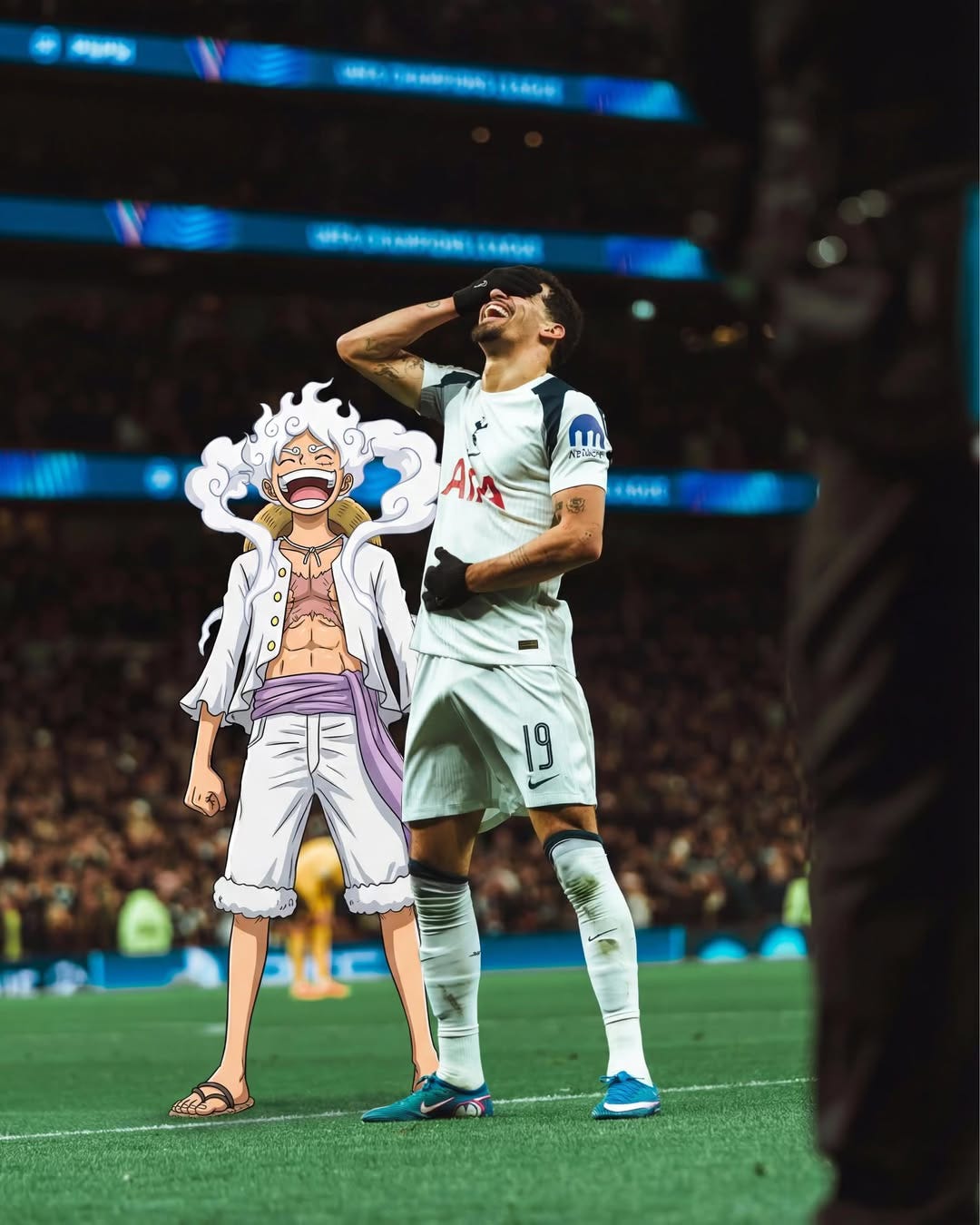
If there were an award for most unapologetic anime advocate in football, he’d be front of the queue. His celebrations – from Naruto to Jujustu Kaisen – aren’t gimmicks. They’re identity. They’re part of who he is.
That’s the difference.
When Passion Becomes Platform
During his Bournemouth days, Solanke was already weaving anime into matchday moments. He brought that same energy to North London, in front of flocks of Spurs fans.


Under the global spotlight of the Premier League, and with persistent exposure, the crossover continued to accelerate.
These passions allow the game to resonate beyond traditional entry points. Some fans don’t walk through the football door first – they enter through culture. Through fashion, through community, through anime.
That’s where opportunity lives.
When a player’s off-pitch interest aligns organically with a brand and their marketing, partnerships feel natural. Less endorsement. More storytelling and resonance.
Solanke’s recent collaboration with Topps is an excellent example.
On Topp!
Collectables sit at the intersection of sport, nostalgia and culture. Cards aren’t just laminated paper – they’re emotional touchpoints.
This month, Topps revealed Solanke’s autograph card through a Japanese-stye animated version of him lighting up Piccadilly Circus, in London. A nod to anime without awkwardly forcing it into the creative.
It worked because anime is already part of Solanke’s identity. Topps didn’t manufacture relevance. Rather, they amplified what existed. Cultural brownie points secured.
Timing matters too.
With football pushing deeper into the US market – and a major international tournament landing in North America this summer – the rollout feels intentional.
Anime culture is deeply embedded in the US, not just as entertainment but lifestyle. Meanwhile, Topps, with 75+ years of heritage and fresh momentum post-Fanatics acquisition, sits firmly within American pop culture.
The crossover is strategic. Far from being random.
This is more than promoting Solanke the striker. It’s about strengthening football’s cultural footprint in markets where the sport still competes to be number one.
Cultural alignment trumps forced relevance. Every time.
The Takeaway Bag
For brands, the message is simply to start with the person, not just the player.
Footballers aren’t one-dimensional. They’re collectors, gamers, creators, music heads, fashion enthusiasts, anime fans, entrepreneurs. Fans connect with who they are – not just what they score.
When brands tap into those passions authentically, they unlock deeper engagement, cross-cultural relevance, new audiences and longer-term affinity. Not because it’s loud, but because it makes sense.
Football is a cultural connector. Largely because of the players who expand it beyond 90 mins.
The opportunity isn’t to manufacture culture, but recognise what already exists and amplify it properly.
That’s how you move the needle.
This was awesome. I remember back in 2015/16 when NFL player were doing Dragon Ball Z inspired celebrations
Quite a good read